You do not have a fat problem below the waist. You have a drainage problem, and it has a name most doctors never say out loud
If your legs are heavy by 4 p.m., if the sock line is still there an hour after the sock comes off, if you lost twenty pounds and your calves did not change, you are not failing at dieting. You are dieting at a problem that does not respond to dieting. Here is the system nobody told you about, why it stalls, and what people are actually taking for it.

You searched the name. So let me skip the part where I pretend you got here by accident.
You have seen Linfozen somewhere (a video, a friend, an ad that followed you around for a week), and you want to know the same thing everyone wants to know before they spend fifty-nine dollars on a bottle of drops: is there anything real underneath it, or is this another thing that makes my urine expensive.
Fair. I am going to answer that. But I am going to answer it backwards, because the honest answer to "does this work" is useless until you understand what it is supposedly working on, and almost nobody has explained that part to you correctly. Not the ads. Probably not your doctor either, and that is not entirely their fault.
So start here, with the detail that gives it away.
Look at where it stops. Whatever is happening to your legs, it ends at the ankle. It ends at the wrist. There is a line, and the line is the whole story.
Roll your sock down. There is a shelf. Above it, the leg is full, dense, tender if you press hard. Below it, past the ankle bone, the foot is normal. Ordinary. It could belong to somebody else.
Now think about what that means for one second, because it eliminates almost everything you have been told.
Body fat does not do that. Body fat does not check for a boundary and politely stop. When you gain weight, you gain it in a gradient: face, arms, belly, thighs, all of it, at different speeds but never with a hard edge. When you lose weight, the same thing runs in reverse. That is why the standard advice sort of works for most people and did nothing for you.
A hard edge is not a fat pattern. A hard edge is a plumbing pattern. It is what you see when something is being held in a compartment, and the compartment ends where the drain begins.

Which raises the question that runs the rest of this article, and I want you holding it the whole way down:
if something is being held in your legs, what was supposed to be moving it out?
The circulation nobody drew for you in school
You were taught one circulatory system. Heart, arteries, veins, a red loop and a blue loop, the diagram on the classroom wall. Complete picture, as far as most people ever learn.
It is about half of what is actually running in there.
Alongside every blood vessel in your body there is a second network, finer than the first, carrying a pale fluid instead of a red one. It is called the lymphatic system, and its job is drainage. All day, plasma leaks out of your capillaries into the space between your cells. That is normal, that is supposed to happen, that is how cells get fed. Most of it gets reabsorbed. What does not get reabsorbed, plus the cellular garbage, plus the proteins that are too large to squeeze back into a vein, gets picked up by the lymphatic vessels and hauled back to your bloodstream through your chest.
Roughly two to three liters of it a day. Every day of your life, without you noticing, as long as it works.
Now here is the part that reframes everything, and I want you to sit with it, because once you see it you cannot unsee it in your own legs:
Your blood has a pump. Your lymph does not. There is no lymphatic heart. Nothing in your body is assigned to push that fluid uphill against gravity, all day, from your ankles to your chest.
Read it again. There is no pump.
Blood gets a fist-sized muscle firing a hundred thousand times a day whether you cooperate or not. Lymph gets nothing of the kind. It moves on three weak, borrowed forces: the walls of the lymph vessels themselves squeezing in slow waves, your breathing creating suction in your chest, and, biggest of the three, the muscles around the vessels contracting and milking them along.
That is the entire propulsion system. Vessel tone, breath, and movement.
Which tells you exactly where it fails first. Not the arm, which you swing all day. Not the chest, which is inches from the outlet and moves with every breath. The leg. Farthest from the drain, working directly against gravity, and dependent on muscle contraction in a body that now sits for nine hours a day.

So when someone tells you your legs "retain water," they are not wrong, they are just being uselessly vague. The question is never whether fluid is there. The question is why it is not leaving, and the answer is that the only system responsible for removing it is running on borrowed power and losing.
But fluid alone would not explain the hardness. Water is soft. Water moves when you press it and comes back when you stop.
Your legs do not behave like water. So something else is in there.
It was never water. That is why nothing you tried touched it
Here is where the popular version gets it wrong, and getting it wrong is why a decade of remedies did nothing for you.
The fluid your lymphatic system carries is not water. It is water plus protein, large molecules that leaked out of your bloodstream and physically cannot get back in the way they came. A protein molecule is too big to re-enter a capillary. The lymphatic vessel is the only door it has. If that door is slow, the protein does not go anywhere. It sits in the tissue.
And protein sitting in tissue does two things, both of them bad, both of them explaining a symptom you already have.
It pulls in more water and holds it there
Protein is osmotically active, which is a technical way of saying it drags water toward itself and does not let go. So a slow drain does not just leave fluid behind. It creates a magnet for more. The leg does not stay the same. It builds. Which is why the swelling is worse at 6 p.m. than at 8 a.m., and worse in August than in February, and worse after the flight than before it.
It triggers a low, permanent inflammatory response
Protein is not supposed to be loitering in the space between your cells. Your immune system reads stagnant protein as something to clean up, and parks there. Not an infection, not a fever, nothing you would ever call being sick, just a low, chronic, background irritation that never resolves because the cause never leaves. That is the tenderness. That is why the leg hurts when a hand presses it and a bruise appears from a bump you do not remember.

Now you know why every water pill you ever took was a waste of a copay. A diuretic tells your kidneys to dump water. It has no instruction for the protein, and the protein is the anchor. You lose a pound of water overnight, you feel briefly encouraged, and by Thursday the protein has pulled the water right back where it was, because you removed the puddle and left the thing that makes puddles.
Same reason drinking more water never fixed it, and drinking less never fixed it either. You were adjusting the wrong variable in the wrong system.
The part that makes it permanent: the drain closes itself
If it stopped there, you would have soft, annoying, reversible swelling. Elevate the legs, sleep it off, mostly fine by morning. Plenty of people live exactly that way for years.
You are reading this because yours stopped doing that. It stopped going down overnight. It got firm. Somewhere along the line it changed from a fluid you could push around with a thumb into something with structure, and no amount of elevation touches it now.
This is the step almost nobody explains, and it is the reason the clock matters.
When inflammation runs continuously in one place for long enough, the body does what it always does with chronic irritation anywhere: it lays down fibrous tissue. Collagen. Scar-type material. It is not a malfunction. It is your repair system responding to a wound signal that never switches off, so it keeps patching a place that was never cut.
That fibrous material builds up in exactly the space where the fluid is stagnating. And it is stiff. It does not stretch. It grips.
Follow what that does to the plumbing:
The lymphatic vessels run through that same tissue. They are not armored pipes. The smallest ones are a single cell thick, thinner than a hair, held open by delicate filaments anchored to the surrounding tissue. They are built to be open, not to be strong.
Fibrous tissue compresses them. The vessel that was already struggling is now being squeezed from the outside by scar material.
Compressed vessels drain even less. More protein stays. More water follows it. More inflammation. More fibrosis on top of the fibrosis.
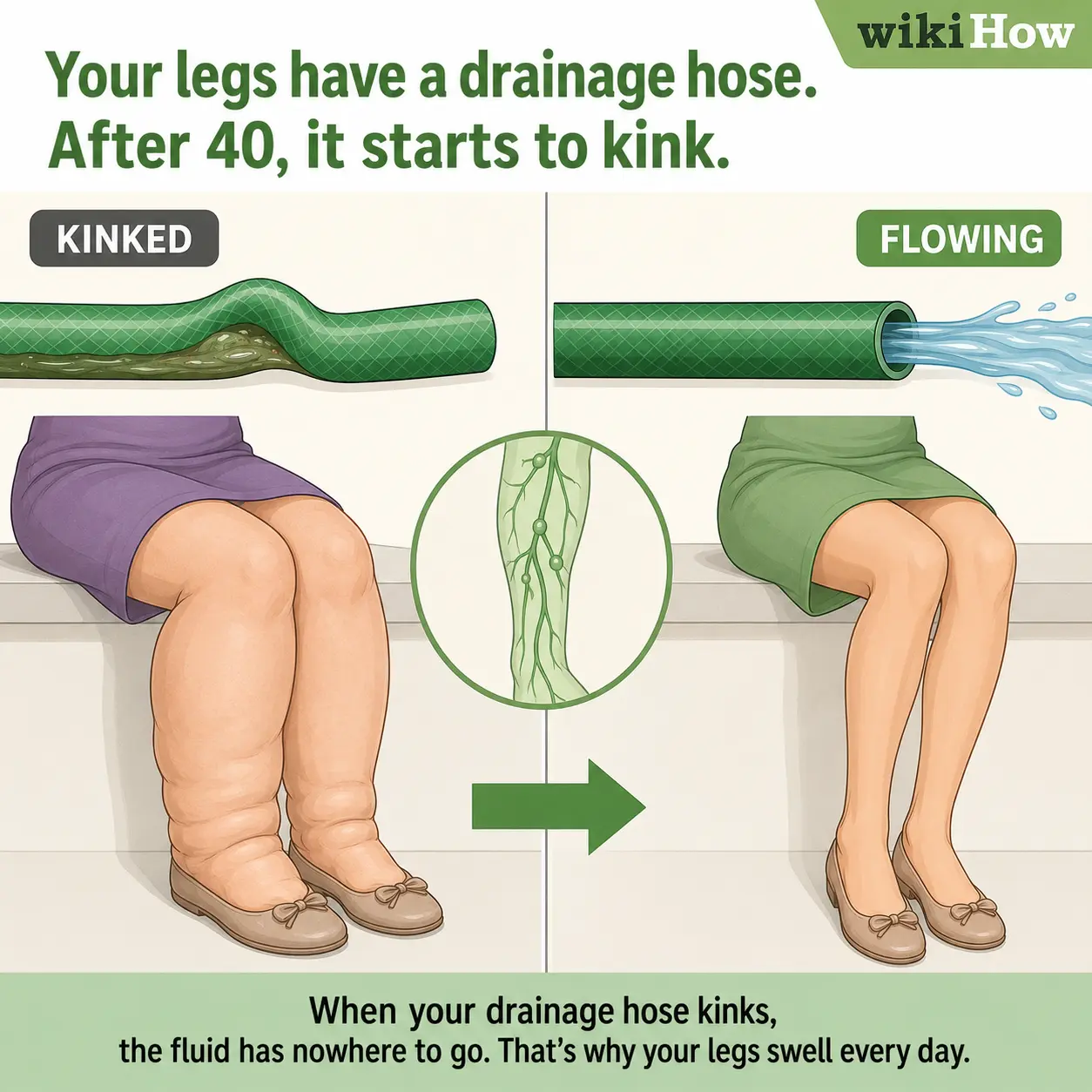
That is a closed loop. The blockage now manufactures more blockage, and it does not need any help from you to keep going. You could eat perfectly for a year and the loop would not care, because nothing you eat has an opinion about scar tissue wrapped around a lymph vessel.
This is the honest reason it got worse every year while you were doing everything right. You were not slipping. The loop was closing.
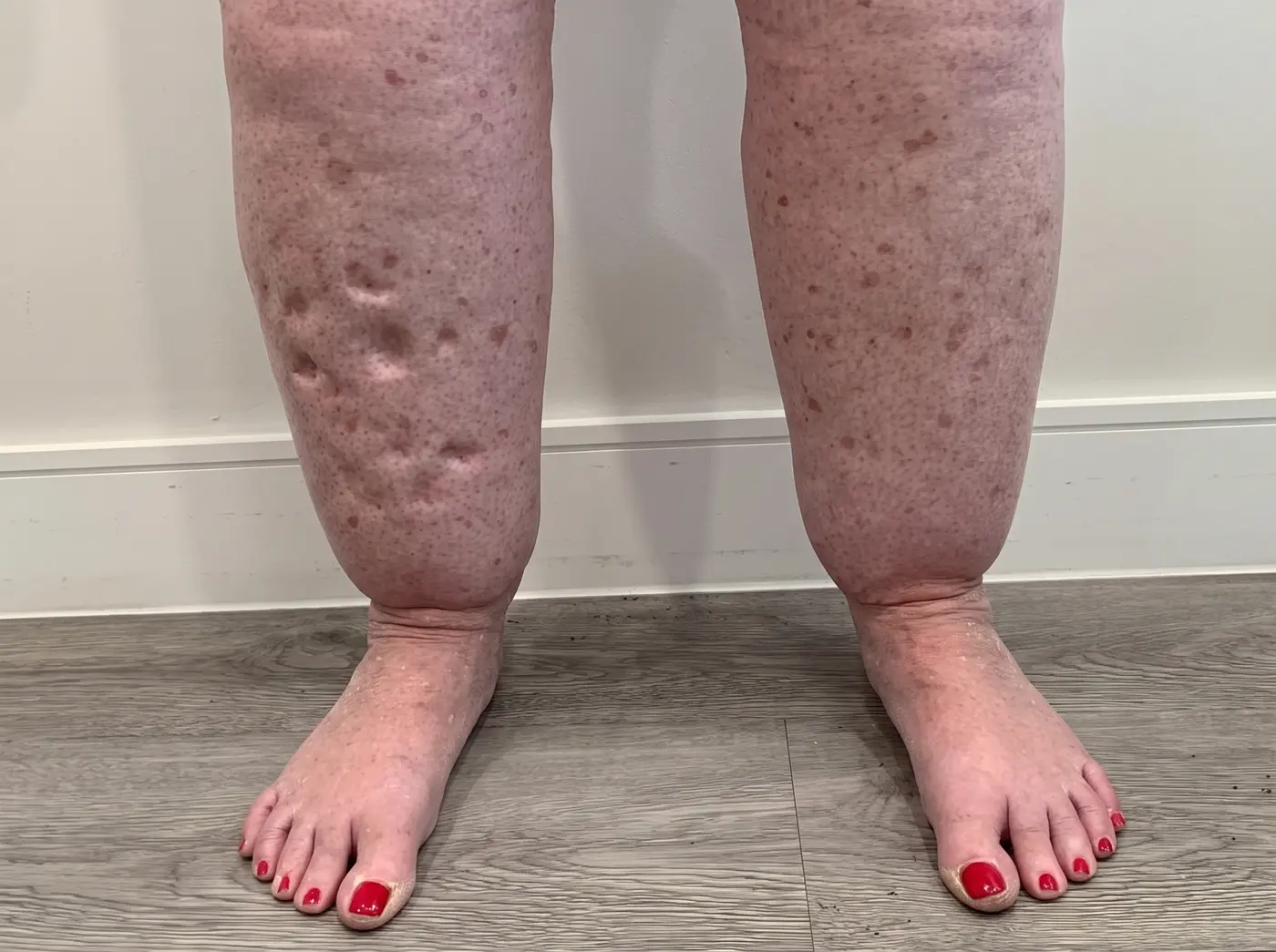
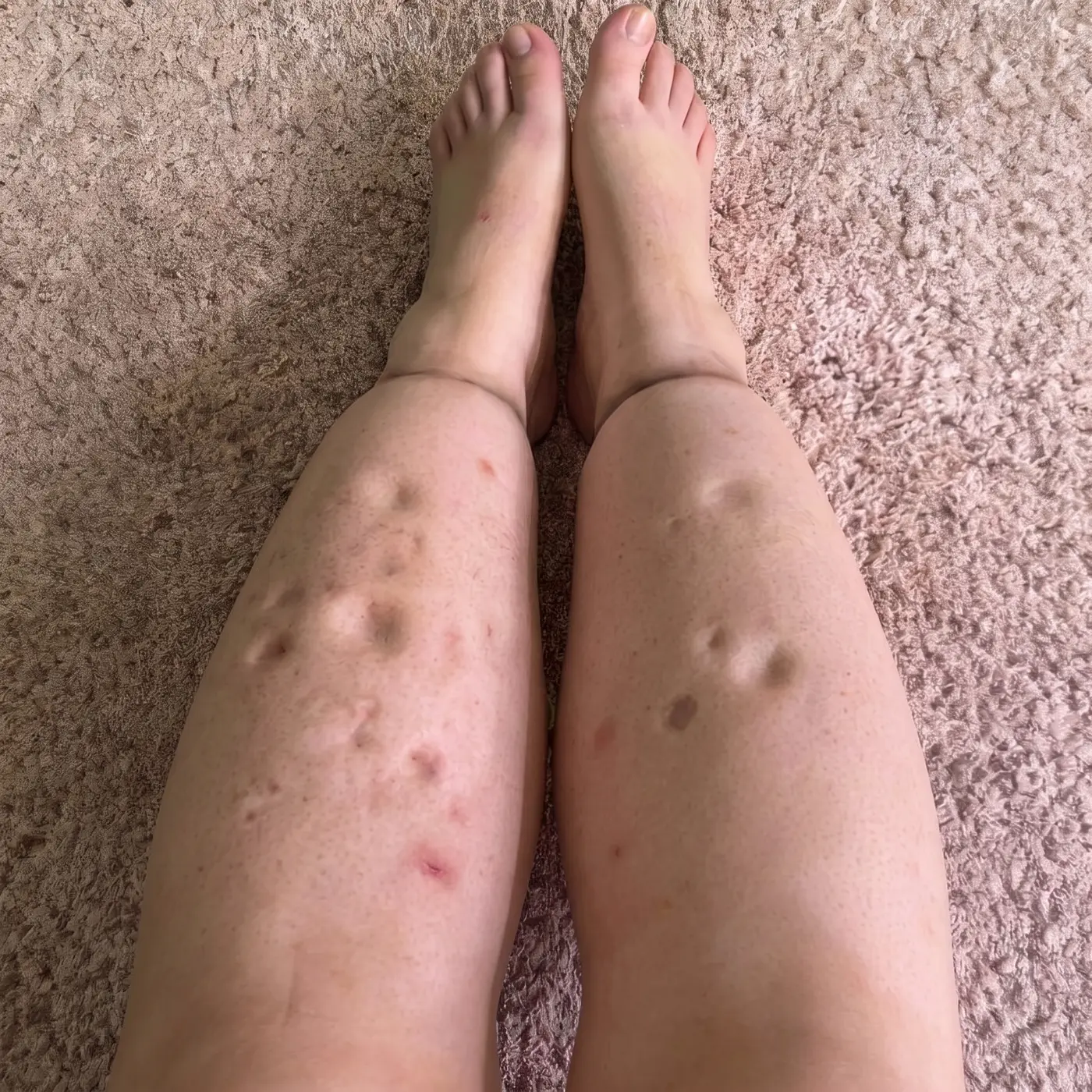
And it explains the texture. Press your thigh, hard, and feel for small firm nodules under the skin: pea-sized, gravel-like, sometimes in strings. Most women find them the first time they go looking, and most are unsettled by it, because nobody ever told them to look and nobody ever told them what they are.
That is fibrosis. That is what a closed loop feels like from the outside.
Why it started when it started
Ask a woman when her legs changed and she almost never says "gradually." She names a year. And the year is almost always one of three.
Puberty. A pregnancy. The run-up to menopause.
That is not coincidence and it is not a story about weight gain at hormonal transitions, though that is the explanation most women get handed. Estrogen has direct effects on the tissue we have been discussing: on the tone of the vessel walls, on how permeable your capillaries are, and on how fat is distributed and behaves below the waist. When estrogen shifts hard, the drainage system shifts with it.
Which is why the pattern is overwhelmingly female, why it so often appears in the same family across three generations of women, and why it tends to take a step down (not a slide, a step) at each hormonal event and then hold at the new level.

Think back and you can probably date yours. Legs that were fine at fifteen and different at seventeen. A pregnancy after which the swelling never fully went back, and everyone said it was the baby weight even after the baby weight was gone. A perimenopausal stretch in your forties where nothing about your eating changed and your calves did anyway.
Each step down was a moment when the drainage got a little slower and never recovered. The loop did not start over. It started from where it already was.
There is something useful buried in that, and it is not obvious.
If your legs changed at a hormonal transition rather than accumulating steadily since childhood, then what you have is not a fixed body type you were born with and are stuck inside. It is a system that was working, then got slower, in stages you can name. Systems that got slower are a different category of problem from parts you were issued at birth.
That is also why the timing of the next step matters. If you are approaching or inside menopause, you are approaching the transition that tends to be the steepest of the three, and the state of the tissue going in is not irrelevant to where it lands coming out.

The days it is worse, and what each one tells you
You already know your own pattern. What you probably do not know is that each of those triggers is a clean confirmation of the mechanism, and reading them correctly is the fastest way to tell whether this is your problem.
Heat
August is worse than February and everyone assumes it is about drinking more water. It is not. Heat dilates your capillaries, which means more plasma leaking into the tissue per hour, arriving at a drainage system that has no extra capacity. Supply rises, removal does not, and the difference sits in your ankles by afternoon.
Flying, or any long sit
Two of the three forces that move lymph are breath and muscle contraction. Sitting still for four hours removes the muscle one almost entirely, and cabin pressure does the rest. This is also why the desk job that started in your thirties shows up in your legs in your forties. It is not the chair, it is nine hours a day of the pump being switched off.
The week before your period
Cyclical swelling that arrives on schedule and leaves on schedule is the hormonal effect on vessel tone and permeability, running in miniature every month. If your legs have a bad week that you can predict from a calendar, that is your own body demonstrating the estrogen link without needing anyone's opinion.
Salt, but not the way you were told
Salt does matter, and it matters far less than the advice implies. A high-sodium day adds fluid to a system that is already backed up, so you notice it more than a person with normal drainage would. Cutting salt in half will take the edge off a bad day. It will not touch the reason the bad day was possible.
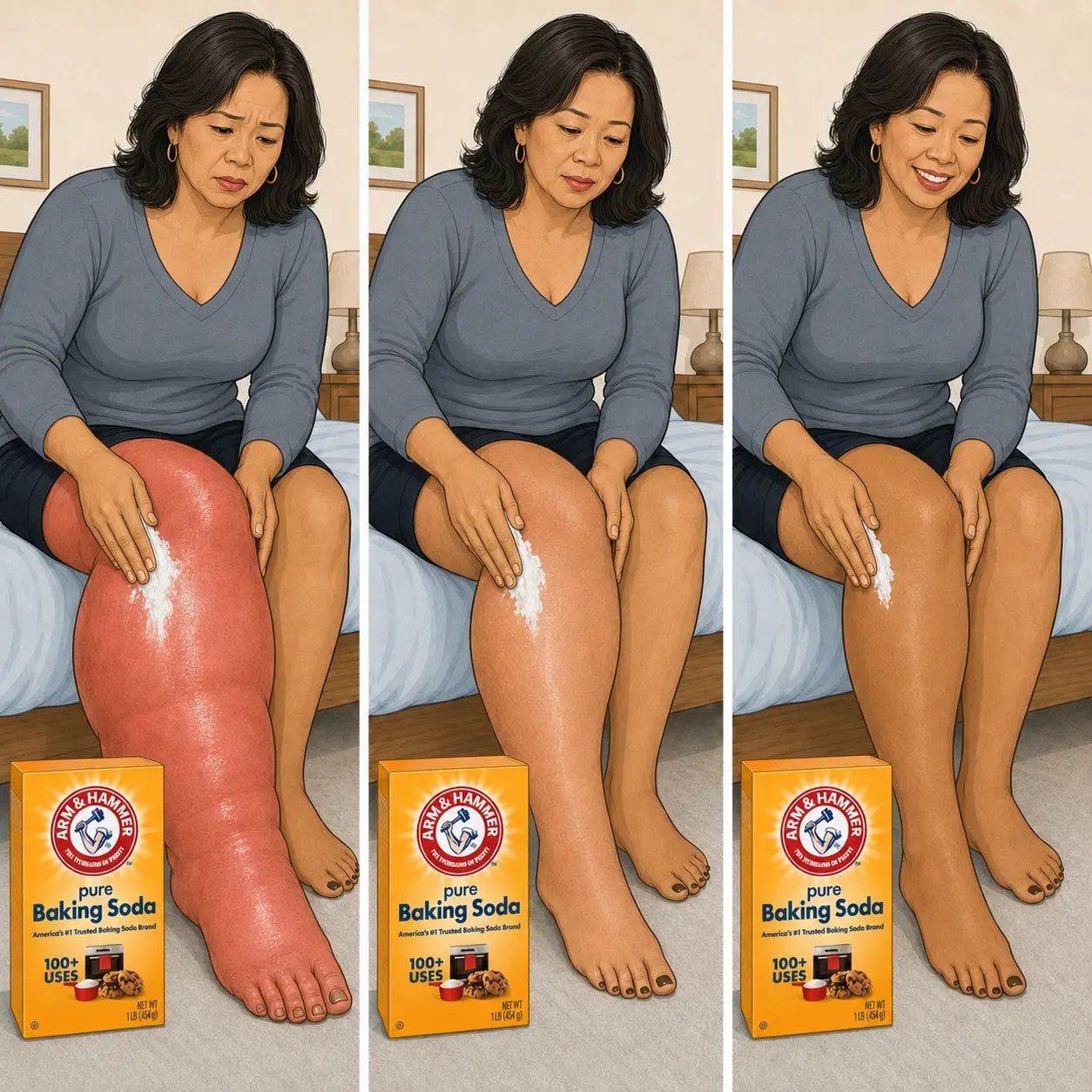
Here is the tell that separates this from ordinary swelling, and it is worth checking tonight.
Ordinary swelling resolves overnight. Eight hours horizontal removes gravity from the equation, and a healthy system clears the backlog while you sleep. If you wake up and your legs are normal, your drainage is slow but not stalled.
If you wake up and they are still full, if the best they get all day is the moment you get out of bed, and it is downhill from there, then eight hours with gravity removed was not enough. That is not a busy day catching up with you. That is a system that no longer clears its own backlog, which is the definition of the loop having closed.
Now every dead end you hit makes sense
This is the part where women tend to get quiet, then a little angry. Because once the loop is on the table, ten years of failure stop looking like personal failure and start looking like the predictable result of aiming at the wrong target.
The diet worked. It just worked somewhere else.
You lost the weight. Your face changed, your waist changed, your bra size changed, and your calves did not move. You have probably been told that means you were not consistent enough.
You were consistent. A calorie deficit shrinks fat cells. It has no mechanism whatsoever for removing protein-rich fluid from your interstitial space, and no mechanism for dissolving fibrous tissue. You asked a system that empties fat cells to fix a problem in the tissue between the fat cells. It did its job faithfully everywhere the problem was fat, and nothing where it was not.
Which, incidentally, is why the shape got stranger as you got smaller. The upper body responded. The lower body held. The gap widened. That is not you being oddly built. That is a drainage problem becoming visible as everything around it shrinks.
Exercise helps, and it cannot finish the job.
This one is genuinely useful and I will not pretend otherwise. Muscle contraction is one of the three forces that move lymph, so walking is one of the few things that directly assists drainage. Every legitimate protocol for swelling includes movement, and you should keep it.
But look at the loop again. Movement squeezes the vessels from the outside to push fluid along. If those vessels are being compressed by fibrous tissue, you are pumping harder through a pipe that is being crushed. You get some benefit and then you plateau, and you have felt exactly that plateau: the six-week mark where things improve and then simply stop improving no matter how much more you do.
Compression squeezes the pipe. It does not open the drain.
Compression garments do something real: external pressure resists fluid accumulating in the tissue, and for many people that means a leg that is measurably smaller at the end of the day.
Then you take it off. And within a couple of hours you are back, because compression never addressed why the fluid stays. It only opposed the fluid while you were wearing it. It manages the symptom on a rental basis. Twenty dollars a pair, every day, for the rest of your life, and the first morning you skip it the leg tells you nothing changed underneath.

External pressure opposes accumulation while it is worn. It does not change what happens underneath when it comes off.

The difference between managing a symptom daily and addressing the loop that produces it.
Manual drainage works beautifully, for about a day and a half.
Manual lymphatic drainage is a real, skilled technique, and if you have had it done properly you know it works. You walk out lighter, and it is not your imagination. A trained therapist moves fluid along the vessels by hand.
It costs somewhere around a hundred and twenty dollars an hour, it requires an appointment, and the effect fades in roughly forty-eight hours, because a pair of hands cannot stay on your leg. To hold the result you would need it twice a week, indefinitely, which is a car payment.
Notice what every one of those has in common. Each one pushes fluid out from the outside. Not one of them does anything about the fibrous tissue that is squeezing the vessel shut, or about the protein that keeps calling more fluid in.
They are all working on the puddle. The loop is upstream.
Why nobody in a white coat ever said this to you
There is an objection forming and it deserves a straight answer, because if I do not deal with it now, nothing below this line will land.
It goes: if there were a whole system involved, and it had a name, my doctor would have told me.
Reasonable. And the answer is not that medicine is hiding anything from you. It is duller than that, and once you see the shape of it you will recognize every appointment you have ever had about your legs.
There is no specialty that owns it. Cardiology owns the heart. Vascular surgery owns arteries and veins. Dermatology owns skin. The lymphatic system runs through all of them and belongs to none of them, so it falls in the gap between three specialists who each correctly conclude it is not their department.
It gets almost no time in training. The lymphatic chapter is short and it is mostly about immunity, because that is the part that shows up in exams. Drainage failure as a cause of a leg that looks like yours is a paragraph, if that.
Nothing on a standard panel shows it. Your blood work is normal, because it is normal. This is happening in the space between cells, and there is no cheap test that looks there. From inside a twelve-minute appointment with clean labs and a patient carrying extra weight, the statistically likely answer really is weight.
So the sentence you got, lose some weight and see how you feel, was not laziness. Given what was in front of them and the time they had, it was the most probable answer. It was just the most probable answer to a question nobody asked correctly, because the question was never "why is this woman heavy." It was "why does it stop at her ankle."

Which is why the boundary at your ankle matters so much more than anything on this page. It is a physical finding, it is on your own body right now, and it does not require anyone's permission or agreement to be there.
You do not need a specialist to confirm the line exists. You need to stop treating it as a fat pattern, because it never was one.
And to be explicit about my own position, since I am the one who benefits if you buy something: if the boundary is on one leg only, or it arrived suddenly, close this page and call a doctor today. Those are different problems with worse downsides, and no supplement is the right response to either one.

You have read the part nobody explains
There is a formula built around both points of that loop. Here is where to look at it.
Show me what works on the loop Official page · takes about 30 secondsNo diet. No 5 a.m. gym. No compression sleeve to put on every morning.
Goes to the official Linfozen page. We earn a commission if you buy.So what would actually have to happen
If the loop is the problem, then anything that only pushes fluid is treating the exhaust. To interrupt a self-feeding cycle you have to hit it at more than one point, and there are only two points that matter.
Hit one without the other and you get what you have already been getting. Soften the tissue but leave the vessels weak and the fluid still has no engine. Stimulate the vessels but leave them wrapped in scar tissue and you are revving a motor with the handbrake on.
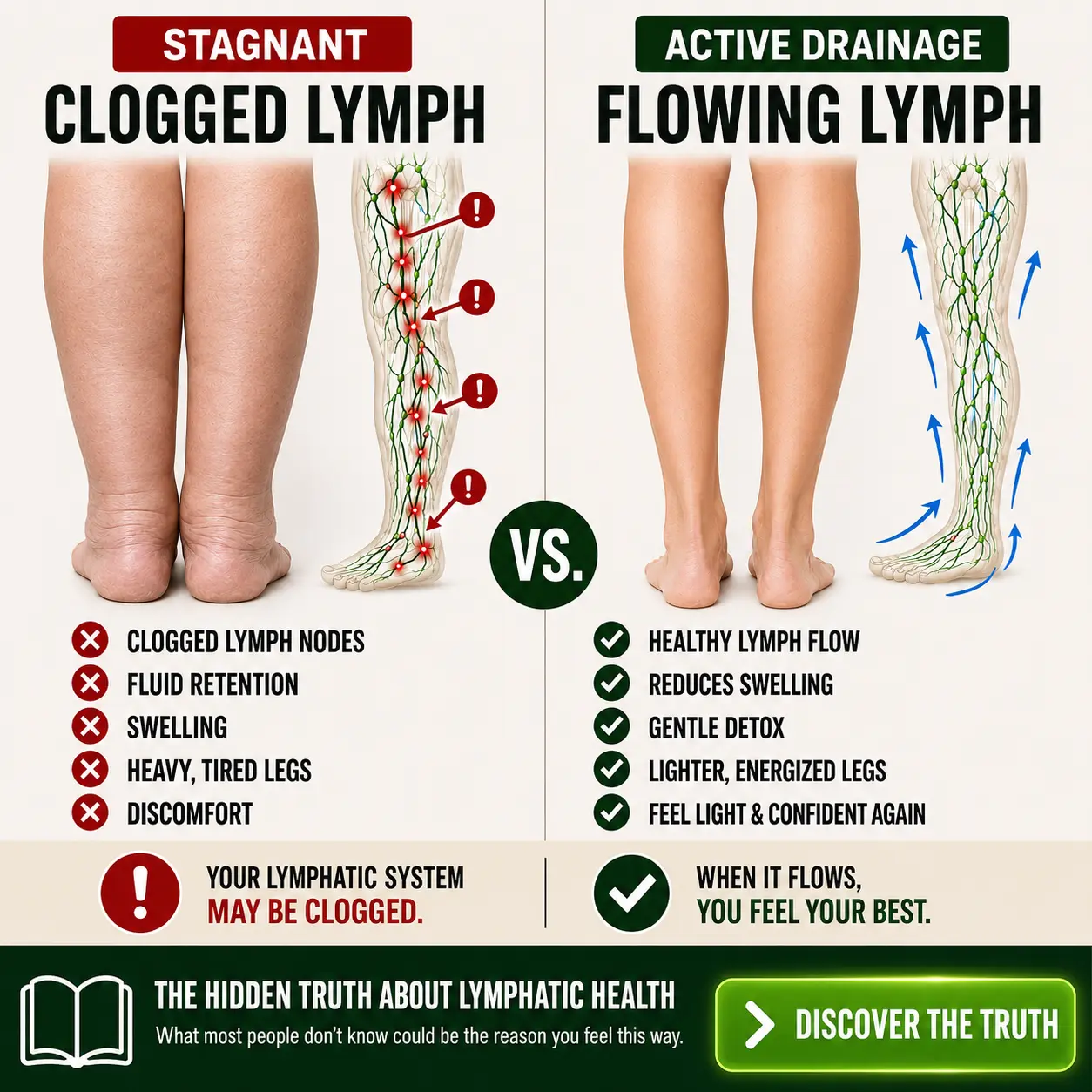
That is the entire logic of what you came here to ask about.
Where Linfozen fits, described plainly
Linfozen is a one-ounce bottle of herbal drops with a dropper. You take it under the tongue. That is the whole product, and I am describing it flatly on purpose, because this category is drowning in language that makes a bottle of drops sound like a medical device, and you have built up an immunity to that language the same way I have.

What makes it worth your attention is not the bottle. It is that the formula is built around those two points rather than around one, which is the distinction between it and the shelf of "lymphatic support" and "de-bloat" products it sits next to, nearly all of which are diuretics with better branding, aimed squarely at the puddle.
Sublingual matters for a practical reason worth one sentence: the tissue under your tongue absorbs directly into circulation instead of routing through digestion first. For a category where compliance is the real failure point, four seconds and no glass of water is not a gimmick, it is the difference between a bottle that gets finished and a bottle that ends up in a drawer behind the vitamins.
And the honest framing: this is a supplement, not a prescription. It supports drainage. It does not cure a disease, and anyone telling you a bottle of drops cures lipedema is lying to you about something you can check.
I would rather lose the sale on that sentence than have you order it expecting something it cannot be.
What changes first, and why it happens in that order
If drainage improves, it does not improve everywhere at once, and the sequence is not random. It follows the loop backwards. Knowing the order matters, because the most common reason people quit is that they expected the last change to arrive first.
Fluid, before anything else. The freely mobile fluid is the only part with nothing holding it in place, so it is the first thing that can move. What that feels like is not dramatic: shoes that go on the same at 6 p.m. as at 8 a.m., a sock line that fades faster, waking up with legs that feel like they belong to you. Nothing visible to anyone else yet.
Tenderness, next. The chronic irritation is driven by stagnant protein. As clearance improves, the signal driving the inflammation weakens, and the leg that hurt when a hand pressed it stops flinching. This is usually the point people notice they have stopped bracing before someone touches their thigh.
Texture, last, and slowest. Fibrous tissue is the newest, densest thing in there and it is the last to give. Softening comes before shrinking, and it comes gradually: the nodules feel less like gravel and more like the tissue around them. This is measured in months, not weeks, and anybody who tells you otherwise is selling you a timeline instead of a product.

Two honest caveats, because they decide whether this is worth your money.
The clock runs against you. Fluid is reversible, and fibrous tissue is reversible far more slowly. Legs that have been firm for fifteen years are a different proposition from legs that got firm two winters ago. That is not a scarcity line to hurry you. It is the same reason any tissue problem is easier to address early, and it is true whether you buy anything or not.
Movement is not optional. Two of the three forces that move lymph are yours: breath and muscle contraction. Nothing in a bottle replaces those. A ten-minute walk after dinner is not filler advice here; it is one of the three propulsion mechanisms, and skipping it means asking the formula to carry a system it was only meant to support.
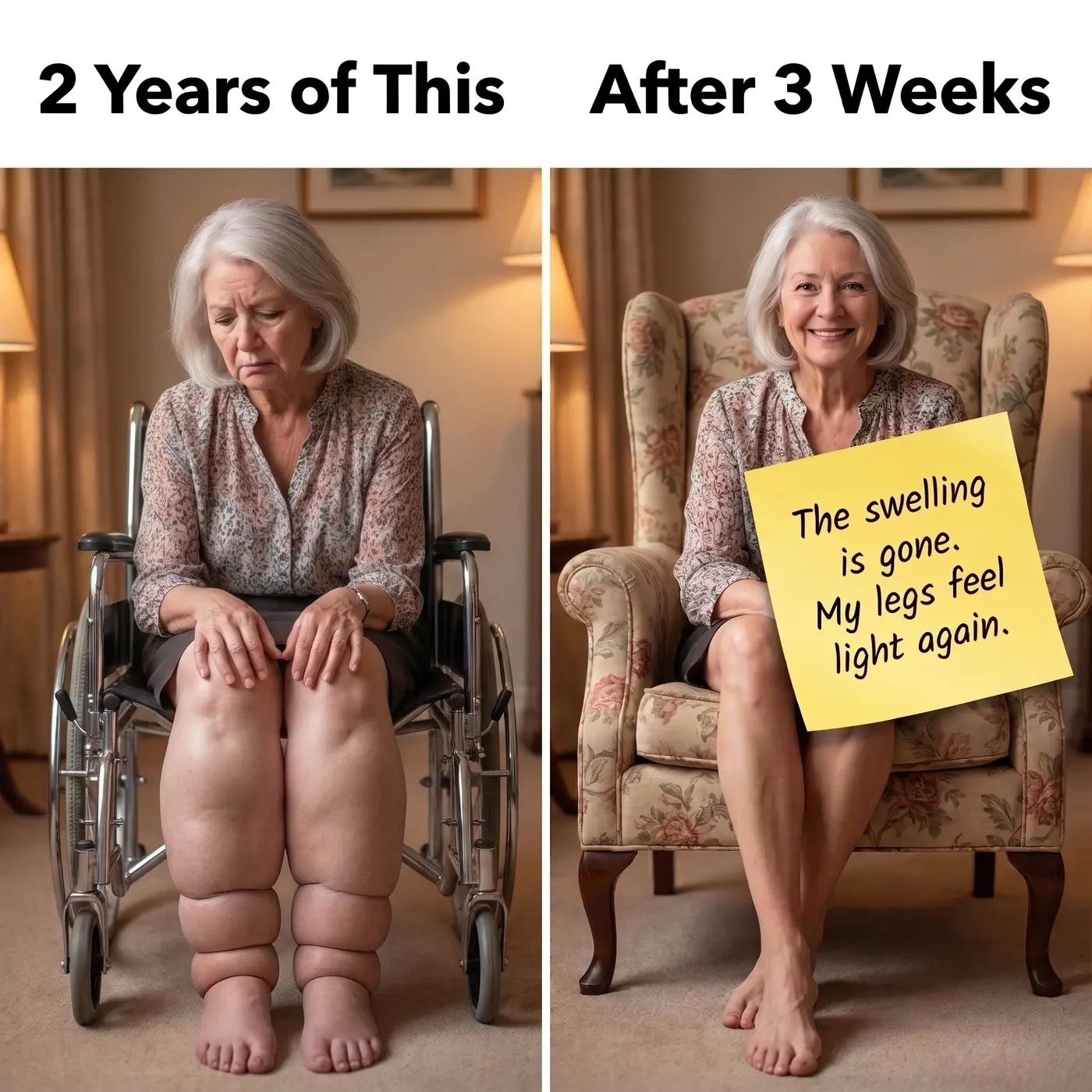
You now know what changes first, and in what order
The sock line is the first thing to move. Sixty days is long enough to find out whether yours does.
Check today’s price 3 bottles cost less than one massage session60-day money-back guarantee. If the sock line never changes, you ask for the refund.
Official page. Pricing and terms are set by the manufacturer. We earn a commission.It is not a body type, and you are not an unusual case
The reason this goes unnamed for so long is that it is filed under something else. It gets called weight. It gets called genetics, usually by someone pointing out that your mother and your grandmother had the same legs, which is true, and which is evidence of a heritable drainage pattern, not proof that nothing can be done about it.
It shows up in women who are thin and women who are heavy, in women who run and women who cannot stand for twenty minutes. The common thread is never the body. It is always the same line at the ankle.








Illustrative portraits.
And there is a name for the version of this that runs in families and concentrates below the waist with that hard cutoff: lipedema. It is not rare. It is chronically under-recognized, it is routinely misread as obesity, and the average woman who has it spends years being told to try harder before anyone looks at the boundary at her ankle and says the word.
If you have been told to lose weight by someone who never pressed your thigh or asked whether the swelling goes down overnight, you were not examined. You were sorted.
Which is the part I would want said out loud if it were my legs: you were not imagining it, you were not exaggerating it, and you were not failing at something everyone else finds easy. You were describing a drainage problem to people who were listening for a discipline problem.
A supplement does not undo any of that. But knowing what you are dealing with changes what you spend the next five years doing, and that is worth something whether or not you ever open a bottle.
Is this actually your pattern? Four questions.
These are the four details that separate a drainage pattern from ordinary weight distribution. They are the same four things a clinician would ask about before looking at anything else.
Where does it stop? If there is a distinct shelf at the ankle or the wrist, with normal tissue past it, that boundary is the single most telling sign.
Does it hurt to press? Ordinary fat is not tender. Tissue with chronic low-grade inflammation in it is.
Did losing weight change it? If the upper body responded and the legs did not, the legs are not holding what the diet was removing.
Can you feel nodules? Press firmly into the thigh. Small, firm, gravel-like pieces under the skin mean fibrous tissue, which means the loop has been running a while.
Four reasons not to buy this
I would rather you skip it than order it for the wrong reason and want your money back in six weeks. So, plainly:
Your swelling is on one side only. A drainage pattern is symmetrical. One swollen leg is a different problem, possibly a vein, a clot or a lymphatic obstruction, and it needs a doctor this week, not a supplement.
The swelling came on suddenly. This loop closes over years. Something that appeared in days is not this, and sudden swelling with shortness of breath is an emergency.
You are pregnant, nursing, or on prescription medication. Herbal formulas interact. Ask your pharmacist, who will answer that question for free and in about ninety seconds.
You want your legs to look different by a specific date. Fluid moves in weeks and fibrous tissue moves in months. If there is a wedding in five weeks, buy the compression garment instead and be happier with the outcome.
If none of those is you, the rest is straightforward.
What it costs, against what you are already spending
A single bottle runs fifty-nine dollars. Two bottles are seventy-nine, and three are eighty-nine. The drop from the first bottle to the third is steep because this is not a thing that gets evaluated in three weeks, and the pricing is built to keep you from quitting halfway to the answer.
Set that against the alternatives you have already priced. One session of manual drainage is around a hundred and twenty dollars and fades in two days. Compression garments are twenty a pair, replaced every few months, forever, and stop working the moment they come off.
Three bottles cost less than one massage.

Sixty days, and the return terms are the part worth reading
There is a sixty-day money-back guarantee, and the reason it is not decoration is the timeline above: sixty days is long enough for the fluid stage and most of the tenderness stage. You are not being asked to judge this in a week.
The practical version: order it, take it daily, walk after dinner, and pay attention to the sock line rather than the mirror. The mirror is the last thing to change and the sock line is the first. If nothing at all has shifted by the end, ask for the refund.

$59 for one bottle · $79 for two · $89 for three
Fluid moves in weeks. Fibrous tissue moves in months. The tissue does not wait for you to decide.
Get the 3-bottle window The stretch where texture change is even possibleSixty days to return it. You are risking the shipping, not the outcome.
Official page. The guarantee is the manufacturer’s. We earn a commission if you order.The questions that come up every time
Most of that shelf is diuretic. It moves water, which is the puddle, and leaves the protein and the fibrous tissue that produce the puddle. If the last thing you tried made you urinate more and changed nothing by the following week, it was working one step downstream of the problem.
The first measurable thing is end-of-day swelling, and it is usually the first two to three weeks or not at all. Tenderness follows. Texture is months. If nothing has changed in the sock line within the guarantee window, the honest read is that it is not your mechanism, and you should take the refund.
Ask your pharmacist, with the ingredient panel in front of them. It is a free ninety-second conversation and it is the correct answer to this question no matter who is selling you what. Nobody writing an advertisement is in a position to clear a drug interaction for you.
Softening is plausible and it is slow. Disappearance is not something anyone should promise you from a bottle of drops. Fibrous tissue took years to build and the honest expectation is tissue that feels less like gravel, not thighs that reset to how they were at thirty.
Keep them, at least at first. Compression opposes accumulation from the outside while this works on the loop from the inside, and they are not competing. If the leg stops needing them, you will find that out on your own without having to guess.
It is an advertisement written by someone who earns a commission, which you should weigh. What you can check independently is the mechanism: the lymphatic system has no central pump, stagnant protein drives chronic inflammation, and chronic inflammation produces fibrosis. That part is not a marketing claim, and it is the part that explains why everything else you tried stopped short.
The one thing worth taking from this page
Even if you close this tab and never order anything, take the mechanism with you, because it changes what you do next.
Your legs are not a discipline problem. There is a second circulatory system, it has no pump, it fails in the legs first, what stalls in it is protein rather than water, and protein that sits long enough turns into tissue that squeezes shut the vessels that were supposed to drain it. Every treatment that disappointed you was aimed at the fluid. The loop was always upstream of the fluid.
That is why the diet worked everywhere except below your waist. That is why the line stops at your ankle. And that is the argument for doing something about it while it is still mostly fluid, because fluid moves in weeks and fibrous tissue moves in months.
You were not wrong about your own legs. You were just the only person in the room looking at the right system.
One last thing before you close the tab
You were not wrong about your own legs. The only question left is whether you spend another year proving it.
Start with the sock line 60-day guarantee · official pageIf nothing shifts, you get the money back and you still keep the mechanism.
Goes to the official Linfozen page. We earn a commission if you buy.